
Your Best Candidate Never Sees Your Job Post. Here Is What AI Sourcing Actually Changes.
You run hiring for a company of a hundred or so people, maybe with one HR colleague, maybe on your own. You write a clear job post, put it on the usual boards, and wait. Applications arrive, but the person you most want to hire is rarely among them, because that person already has a job and was never looking. Reaching them is what sourcing is for, and it is the one thing a small team almost never has time to do by hand. Here is what changes when AI does the reaching, and what stays firmly with you.
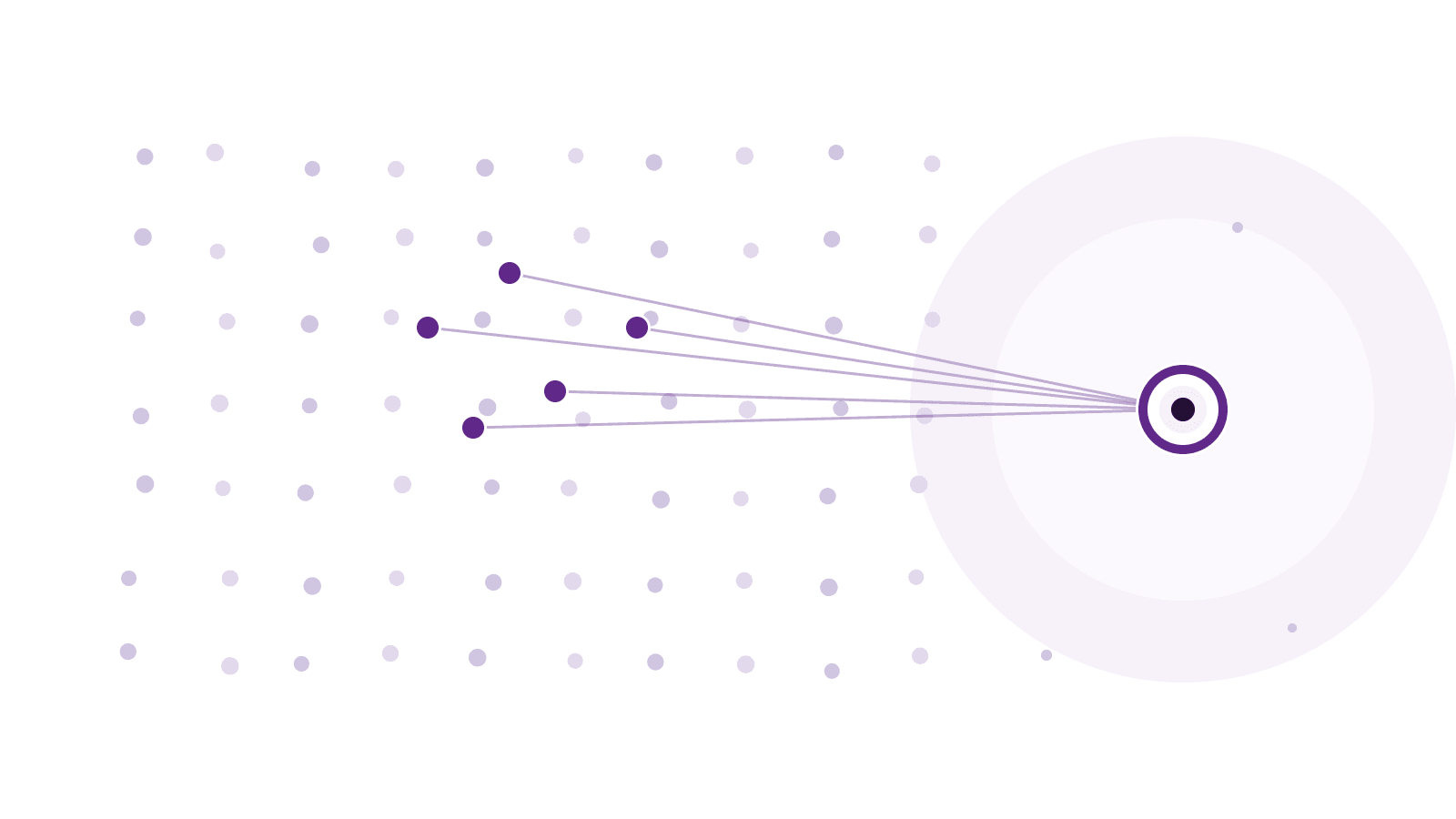
Most hiring on a small team is reactive by default. You open a role, publish it, and work with whoever applies. That is fine when the applicants happen to include the right person. It quietly fails when they do not, and the hard part is that you have no way to feel the difference, because you never see the people who did not apply. Sourcing is the deliberate act of going to find those people instead of waiting for them to find you.
The reason small teams rarely source is not that they doubt it works. Every recruiter knows the strongest candidate is often someone who was not looking. The reason is that doing it by hand is a job in itself, and on a team of one or two there is no one free to do that job. AI-assisted sourcing matters for exactly that reason: not because it replaces a recruiter’s judgment, but because it finally does the part a small team was never going to get to. To see what genuinely changes, it helps to be precise about what manual sourcing is, and where it breaks.
The 30 Percent You Can Reach by Waiting
At any given moment, most of the people who could do your job are not applying to anything. LinkedIn’s talent research puts about 70% of the global workforce in the passive category: employed, not browsing job boards, not sending applications. A job post, by design, is visible only to the minority who are actively looking. Everything you can reach by publishing and waiting sits inside that slice.
That is not a small gap to shrug off. It means the strongest candidate for most roles is statistically unlikely to be someone who applied, for the simple reason that the best people are usually employed and settled enough not to be searching. It is the same asymmetry that sits behind the flood of AI-written applications every open role now attracts: applying has become free and instant, so a posting draws hundreds of lookalike profiles overnight while the person you actually want is at their desk, not on a job board. More inbound does not close the gap. It widens it.
Sourcing is the classic answer: stop waiting and go find those people directly. The problem is never that recruiters do not know this. It is that the work does not fit in the week.
What Manual Sourcing Really Involves
Done by hand, sourcing a single role is a small project. It is not one task but a chain of them, and each link takes real time from someone who usually has ten other things open.
- Translating the role into a search. Turning a job into the right keywords, titles, and boolean strings, then guessing at the synonyms a good candidate might use instead of yours.
- Paging through results. Reading profile after profile across a network or two, cross-checking, and keeping a spreadsheet of who looks worth contacting.
- Writing outreach one by one. A generic message to a passive candidate is ignored, so each note has to be personal, which means each note takes minutes you multiply by dozens.
- Chasing and tracking. Following up, logging replies, and remembering where every conversation stands, for one role, while the other roles wait their turn.
Add it up and sourcing becomes aspirational: the thing you mean to do and rarely reach. Worse, the roles that most need it, the senior and the niche ones, are exactly the ones a job board is least likely to fill on its own, so the work you skip is the work that mattered most. This is the quiet math behind why the admin, not the hiring, is what wears recruiters down: the meaningful work keeps losing to the mechanical work that has to happen first.
What Changes With AI-Assisted Sourcing
The shift is not magic, and it is not a robot that hires for you. It is leverage on the mechanical links in that chain, so the reach a small team could never afford by hand becomes something that runs in the background. Line the two approaches up and the difference is concrete.
| What it touches | Manual sourcing | AI-assisted sourcing |
|---|---|---|
| Who you reach | Active applicants plus your own network | The passive majority, across a large pool of profiles |
| How you search | Boolean strings and guessed synonyms | A plain description of the role and its must-haves |
| Time per role | Hours you rarely have | Runs in the background while you work |
| What comes back | A raw list of names to sift | A shortlist ranked against your criteria, reasoning shown |
| Coverage of niche roles | First thing dropped when time is short | The same effort whether the role is easy or hard |
Read down the last column and the pattern is clear. Instead of writing a boolean string, you describe the role in plain language and let the tool search a large pool for you. Instead of a task you schedule and skip, the reach happens while you do the rest of the job. And instead of a raw list of names, you get a shortlist already ranked against the criteria you set, with the reasoning attached, so you can look at a match and disagree with it out loud.
The honest framing is narrow on purpose. AI-assisted sourcing surfaces candidates; it does not decide them. It widens and orders the top of the funnel. The judgment about who is actually worth a conversation, and the message that makes a busy person reply, stay exactly where they were: with you.
What AI Sourcing Does Not Change
A tool can find a hundred plausible people. Only a person can tell which three are worth your week, and write the note that turns one of them from a name into a conversation. That is not a limitation to apologize for. It is the point. When the mechanical reach is handled, a recruiter’s hours move to the parts that were always the real job: reading a shortlist with judgment, and building the relationship that closes the hire. The value of a good recruiter goes up when the paging and the copy-pasting go away, not down.
There is also a pool you have already sourced and never called back. The finalist who lost your last search by a hair is a warm, pre-vetted candidate sitting in your own records, and small teams lose that pool constantly. Before you go looking outward, it is worth mining the silver-medalist candidates you already have. Good sourcing, assisted or not, starts at home before it reaches the wider market.
That is roughly the shape we built Kynto’s sourcing around, for the team with no dedicated sourcer to hand it to. You describe the role, and it searches across a pool of more than 600 million profiles, brings back a shortlist ranked against the criteria you set with the reasoning shown, and leaves every decision with you. It does not message anyone behind your back or make the call for you. It just means the passive 70% is finally within reach of a team that could never have paged through them by hand.
Key Takeaways
- A job post only reaches the roughly 30% of the workforce who are actively looking. The stronger candidate for most roles is usually in the passive majority a posting never touches.
- Manual sourcing works but rarely happens on a small team, because building searches, paging through profiles, and personalizing outreach is a job no one is free to do.
- AI-assisted sourcing changes the reach and the mechanics, not the judgment. It brings back a ranked shortlist from a far larger pool; deciding who is worth a conversation stays with you.
FAQ
Is AI sourcing just spamming passive candidates at scale?
It is the opposite when it is done well. The value is precision, not volume: a short, ranked list of people who genuinely fit, so your outreach is smaller and more relevant, not a blast to everyone. A passive candidate ignores a generic message and remembers a specific one, so the personal note still matters, and still comes from you.
Do we still need a recruiter if a tool does the sourcing?
Yes, and the recruiter becomes more useful, not less. Sourcing software handles reach: finding and ordering candidates. It does not read a shortlist with context, sense who is a real fit for your team, or build the relationship that gets a busy person to say yes. Those are the recruiter’s job, and they get the time back that the paging used to eat.
We already drown in applications. Why source more people?
Because volume and reach are not the same thing. Your inbox is full of the active minority; sourcing reaches the passive majority you never hear from. The goal is not more candidates, it is the right ones. A handful of well-matched passive profiles is worth more than another hundred lookalike applications you have to screen out.
Sourcing has always been the highest-leverage move in hiring and the first one small teams cut, not for lack of belief but for lack of hours. What has changed is that the hours are no longer the price of admission. When the reach runs on its own, a team of one can finally hire from the whole market instead of the sliver of it that happened to be looking that week.
Sourcing is the work small teams skip first and miss most. If you are the only recruiter carrying every open role, the companion guide lays out how to keep the whole pipeline moving without dropping the parts that matter.
Read: managing 10 open roles as the only recruiter