
Why Do Your Disconnected Recruiting Tools Cost More Than the Manual Work Itself?
Your ATS, your sourcing tool, your calendar and the spreadsheet on the side each do their job well enough on their own. The trouble is that none of them talk to each other, so you become the integration: copying a name here, re-typing a note there, checking three places to answer one question. This piece is about that hidden tax, why it quietly costs more than the manual work everyone complains about, and how small teams claw the time back.
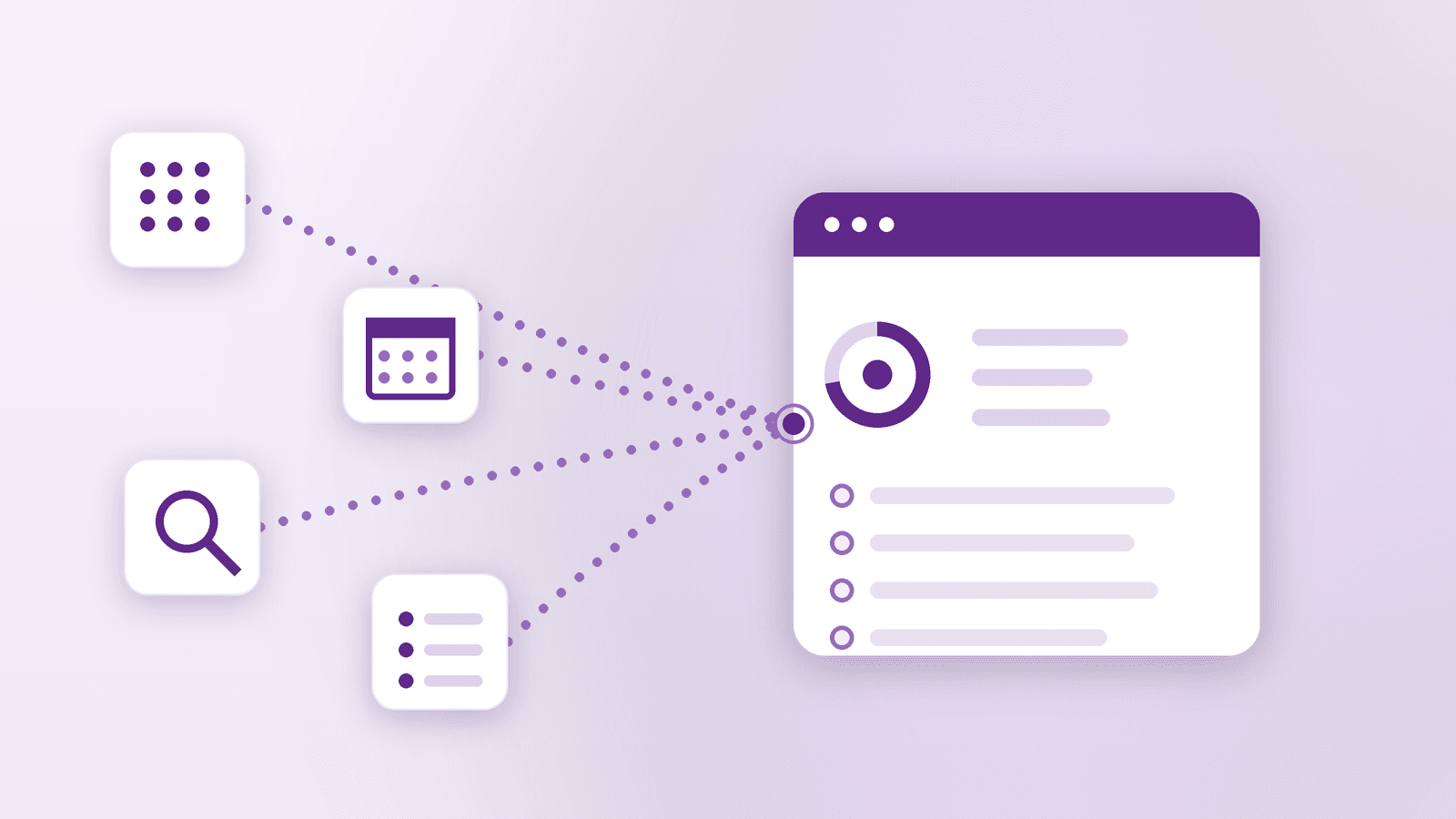
Ask most recruiters what eats their week and they will name the usual suspects: sorting CVs, chasing hiring managers, scheduling interviews. All real. But sit next to someone running a search in a small team and you notice a different pattern underneath. A candidate replies on LinkedIn, so you switch to the sourcing tool. You want to log it, so you switch to the ATS. You want to book a call, so you switch to the calendar and then to email. You want to see the whole pipeline at a glance, so you switch to the spreadsheet you actually trust. Each move takes seconds. You make them hundreds of times a day.
That is the work no one wrote into your role: holding four or five disconnected tools together with your own attention. It rarely shows up in a report, because it is not a task with a name. It is the space between the tasks. And on a small team, where one person often owns the whole funnel, that space is where a surprising amount of the day goes.
The Second Job No One Wrote Into Your Role
When a stack is fragmented, the tools stop being where the work happens and become places you have to keep in sync. The candidate exists in the sourcing tool, again in the ATS, again in a calendar invite, again in a row of the spreadsheet, and maybe once more in a Slack message to the hiring manager. None of those copies update the others. So you do it by hand, and you do it defensively, because the moment one copy drifts out of date is the moment a candidate gets two conflicting emails or slips through entirely.
This is not a discipline problem, and it is not a sign that anyone is bad at the job. It is a structural cost of running tools that were never designed to share a source of truth. The more roles you carry at once, the heavier it gets, because the number of things to reconcile grows with every open req. It is the same coordination drag we described in the hours that quietly disappear into recruiting admin, seen from a different angle: not the tasks themselves, but the seams between the tools you use to do them.
What the Toggling Actually Costs
The cost is easy to dismiss because each switch is so small. The research on knowledge work says otherwise. A Harvard Business Review study of nearly 140,000 hours of work found people toggle between different apps and websites around 1,200 times a day, and spend just under four hours a week simply reorienting themselves after each switch. Over a year that adds up to close to 9% of their time at work, lost not to the tasks but to the friction of moving between the tools that hold them.
Recruiting is close to a worst case for this pattern, because the work is inherently spread across systems: a person to find, a profile to read, a note to write, a meeting to book, a manager to brief. Every candidate is a small relay race between tools, and the baton is your memory. The tax is not only time. It is the dropped thread, the candidate you meant to follow up with, the detail that lived in the sourcing tool and never made it into the scorecard. Fragmentation does not just slow you down; it quietly lowers the quality of the decisions you can make.
Where a Fragmented Stack Leaks Time
The leaks are predictable once you look for them. They live at the handoffs, the moments where information has to cross from one tool to the next and there is no bridge except you.
| Tool in the stack | What it holds | Where the handoff breaks |
|---|---|---|
| Sourcing tool | Profiles, outreach, replies | A candidate who answers has to be re-created by hand in the ATS, notes and context left behind |
| ATS | Applications, stages, history | Hiring managers rarely log in, so real feedback moves to email or chat and never comes back |
| Calendar and inbox | Availability, confirmations | Scheduling means bouncing between three windows, and a reschedule quietly breaks the record everywhere else |
| Spreadsheet | The pipeline you actually trust | It is only correct as long as someone keeps typing into it, and it is out of date the moment they stop |
Scheduling is the clearest example, because it touches the most tools at once. We pulled that one apart on its own in the real cost of coordinating interviews across calendars, and the shape is the same everywhere: the task looks trivial, the coordination around it is not.
The Fix Is Fewer Handoffs, Not More Discipline
The instinct, when a fragmented stack starts to hurt, is to try harder: a stricter naming convention, a rule that everything gets logged, a weekly cleanup of the spreadsheet. That helps for a week. It fails for the same reason it always fails, because it asks a person to be the integration layer forever, on top of the actual hiring. Discipline is real, but it is a tax you pay every single day, and it competes directly with the human parts of the job you would rather protect.
The durable move is to remove handoffs rather than police them. Every time two tools become one, a whole category of reconciliation disappears: nothing to copy, nothing to keep in sync, nothing to drift. You do not need everything in a single system to feel this. Even collapsing sourcing and screening into one place, or scheduling and the pipeline, takes a recurring chore off the board for good. The question worth asking is not “how do we stay on top of all these tools,” but “which of these tools should not be separate in the first place.”
What One Connected System Changes
When the pipeline lives in one place, the day changes shape. A candidate you source is already in the pipeline, no re-entry. The notes you take while screening are attached to the same record that carries the score and the interview. Booking a call does not mean leaving the candidate to open a calendar; the availability and the confirmation sit where the rest of the context already is. The spreadsheet you kept on the side stops being necessary, because the system finally holds the truth you were duplicating into it.
That is the ground Kynto is built on. It runs sourcing, CV screening, scoring, interview scheduling and manager briefs as one connected flow instead of four tools you stitch together by hand, so a candidate moves from found to hired without ever being re-created in the next window. The point is not more automation for its own sake. It is fewer seams, which means fewer dropped threads and more of your week left for the conversations that actually decide a hire.
Key Takeaways
- Fragmented tools create a second, invisible job: keeping four or five systems in sync by hand. It never shows up as a task, so it never gets counted.
- Research on knowledge work found people switch apps around 1,200 times a day and lose close to 9% of their time just reorienting. Recruiting, spread across systems by nature, sits near the worst of it.
- The lasting fix is fewer handoffs, not more discipline. Every pair of tools you collapse into one removes a whole category of copying, syncing and drift for good.
FAQ
We already have an ATS. Why does the work still feel scattered?
Because an ATS is usually one tool among several, not the place the whole search happens. Sourcing, scheduling, manager feedback and your working pipeline often live outside it, so you still spend the day moving information across the gaps. The issue is rarely the ATS itself; it is that nothing connects it to the tools around it.
Isn’t a spreadsheet on the side actually helping us stay organised?
It helps right up until it hurts. A spreadsheet is honest about what your other tools cannot show you at a glance, which is why it survives. But it is only accurate while someone keeps feeding it, and it is a copy of data that already exists elsewhere. It is a signal that your real source of truth is missing, not a replacement for one.
We are a small team. Do we really need to consolidate tools?
Small teams feel fragmentation the most, because one person usually carries the whole funnel and every handoff lands on the same desk. You do not have to consolidate everything at once. Start by collapsing the two tools that create the most copying between them, and measure how much reconciling disappears.
None of this is an argument for buying more software. It is the opposite: the goal is fewer places for a candidate to live, so more of your attention goes to the people and less to keeping the tools aligned. If you want to see what running the whole search in one connected flow looks like, you can explore how Kynto is built for small teams at kyntoai.com.
The tools are not the problem. The gaps between them are. Kynto keeps sourcing, screening, scoring and scheduling in one connected flow, so your attention goes to candidates instead of copying between windows.
See how Kynto brings hiring into one place