
Your Hiring Team Disagrees on a Candidate. How Do You Run a Debrief That Ends in a Decision?
As the HR lead, you organised three interviews for the final candidate. Now the debrief is on the calendar: the hiring manager is enthusiastic, the team lead is hesitant, and the director who joined the last round is “not sure”. Forty minutes later, the meeting ends with “let’s sleep on it”. Nobody in the room did a bad job. The debrief simply had nothing solid to work with.
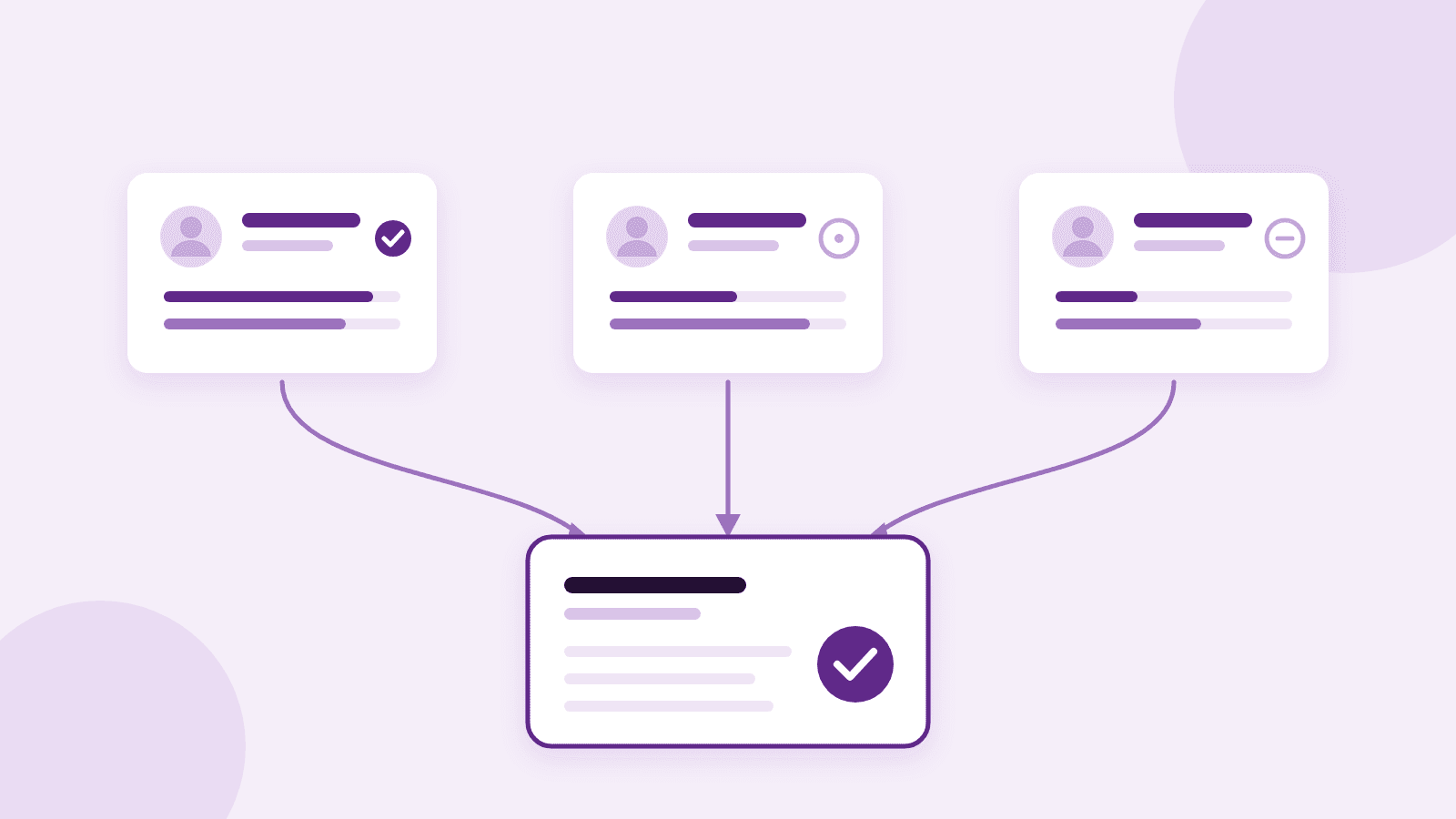
In a company of 50 to 200 people, the HR team rarely makes a hiring decision alone, and rarely should. A manager, a future peer and sometimes a director each see the candidate for an hour. The hiring debrief is the meeting where those hours are supposed to add up to one answer. In practice, it is often the least prepared step of the whole process. This guide is about how to run a debrief when your interviewers disagree on a candidate, so that the disagreement helps the decision instead of stalling it.
The Debrief Is Where the Decision Really Happens
Most of the effort in a hiring process goes into getting candidates to the final round: the job description, the sourcing, the screening, the scheduling. The debrief gets whatever time is left on a Thursday afternoon. Yet it is the step where everything you collected turns into a yes or a no.
The latest French data shows why this step is fragile. In its 2026 study of managerial recruitment practices (May 2026, 1,150 companies surveyed), Apec found that 96% of companies consider behavioural skills at least as important as technical skills. But only 41% assess them in a formal way, through tests or role plays, while 60% assess them informally, often during the phone pre-screen.
Put those numbers side by side. The criteria companies care about most are also the ones most often judged without a written trace. So they reach the debrief as impressions: “good energy”, “a bit rigid”, “I’m not sure about the culture fit”. Two impressions that point in opposite directions cannot be settled by discussion, because nobody can show what they saw.
Three Ways a Debrief Drifts
When a debrief goes nowhere, people tend to blame the candidate (“a tricky profile”) or the panel (“we never agree”). The cause is usually the format of the meeting itself. Three patterns come up again and again.
The first opinion anchors the room
Whoever speaks first sets the frame, and everyone after them adjusts toward it. This is not a character flaw: it is how group judgment works. In Noise: A Flaw in Human Judgment (2021), Daniel Kahneman, Olivier Sibony and Cass Sunstein recommend collecting individual judgments before any group discussion, and describe how Google asks interviewers to rate candidates separately before they talk to one another. A small company can apply the same rule with no extra cost.
Seniority settles the tie
When views split and nobody has evidence to bring, the decision drifts to the most senior person in the room, or the most confident one. The others stop arguing, not because they changed their mind, but because the meeting has no other way to end. The result looks like consensus and is not.
Each interviewer judged a different thing
Often the panel is not disagreeing about the candidate at all. The manager tested problem solving, the peer tested collaboration, the director tested ambition, and each of them is giving an overall verdict based on their own slice. Without shared criteria, the debrief compares a strong answer with a vague feeling. Our article on structured interviews for small teams covers how to split the criteria between interviewers before the first interview.
Before the Meeting: Collect Independent Reads
The most useful thing HR can do for a debrief happens before it starts. Ask every interviewer for a short written read, sent to you alone, before they see anyone else’s. It takes ten minutes per person if you ask for it on the day of the interview, and much longer if you ask three days later.
| What to ask for | Why it matters in the debrief |
|---|---|
| A score for each criterion they were asked to assess | Shows exactly where the panel agrees and where it splits |
| One or two concrete examples per score | Turns “I didn’t feel it” into something the room can discuss |
| An overall recommendation: hire or no hire | Records each view before anyone can be anchored |
| The one question they could not answer | Points to the targeted check you may need before deciding |
With these reads in hand, you can prepare the meeting in a few minutes: list the criteria where everyone agrees, and the two or three where scores split. Those splits are your agenda. Everything else can be confirmed in one sentence.
If written feedback tends to arrive late in your company, it is rarely about goodwill: managers are fitting interviews between everything else. Our guide to shortening hiring manager feedback delays has practical ways to get the reads in on time without chasing.
During the Meeting: Treat Disagreement as Information
A split panel is not a failed process. When two people who saw the same candidate reach different conclusions, they usually saw something real, just not the same thing. Your job as the person running the debrief is to find out which kind of disagreement you are dealing with.
- Start with the splits, not a round of verdicts. Open on the criteria where scores differ. The overall recommendations are already on paper, so there is no need to repeat them out loud.
- Let the most senior person speak last. Agree on this rule once with your managers, so it is a habit and not a snub. It protects the quieter readings, which are often the most precise ones.
- Ask what they saw, not what they felt. “What did the candidate say or do that made you score a 2?” is a question anyone can answer without defending their judgment.
| Type of disagreement | What it usually means | What to do |
|---|---|---|
| Different evidence on the same criterion | The candidate was uneven between rounds | Compare the examples; plan one targeted check if needed |
| Same evidence, different scores | The criterion or the bar was never defined | Agree on the bar now, and write it down for the next hire |
| Different weight given to criteria | The role’s priorities are not shared | Go back to the brief agreed with the hiring manager |
| One interviewer never assessed the point | A gap in how the rounds were split | Do not let a guess count as a score |
The third row is more common than it looks. If the panel weighs the criteria differently, the debrief is replaying a conversation that should have happened at the intake. Going back to the written brief settles it faster than any debate about the candidate.
End With a Decision, Not a Discussion
A debrief needs a decision owner, named before the meeting. In most small companies, the hiring manager decides and HR owns the process and the evidence. Making that explicit changes the tone: the panel is there to inform a decision, not to vote on it, and the person deciding knows they will have to explain it.
Then limit the possible outcomes to three:
- Hire. The offer goes out within 48 hours, before a strong candidate accepts somewhere else.
- No hire. The reason is written in two lines, which also gives you honest feedback for the candidate.
- One targeted check, with a date. A reference call on the precise point that split the panel, or a short exercise. Not a vague “let’s think about it”, which in practice means waiting until someone forgets why they hesitated.
The written reason matters beyond this hire. A runner up who narrowly missed out on one criterion is a candidate you may call back in six months, and the debrief notes are what will tell you why. The same notes also feed the bigger picture described in our article on scoring candidates across the whole process: the debrief should weigh every signal collected, not only the last interview.
This is also where the tooling question appears. When scores sit in one inbox, notes in a document and the candidate history in a spreadsheet, preparing a debrief means rebuilding the file by hand each time. Kynto keeps the scores, interview notes and screening results for each candidate in one place throughout the process, so the debrief starts from the same file for everyone. You can see how candidate scoring works in Kynto.
Key Takeaways
- A debrief stalls when it runs on memories. Collect a written, independent read from each interviewer before the meeting.
- Build the agenda from the criteria where scores split, let the most senior voice speak last, and ask what people saw rather than what they felt.
- Name the decision owner in advance and end with one of three outcomes: hire, no hire, or one targeted check with a date.
FAQ
How long should a hiring debrief last?
With written reads collected beforehand, 20 to 30 minutes is usually enough for a small panel, because you only discuss the criteria where views split. If a debrief regularly runs past an hour, the preparation is usually what is missing, not time.
What if the hiring manager wants to hire against the rest of the panel?
It is their call if they own the decision, but it should be an informed one. Walk through the criteria where the panel scored lower and ask what the manager saw that the others did not. If a doubt remains on a specific point, propose a targeted check before the offer, and write down the reason for the decision either way.
Should the debrief happen right after the last interview?
Collect the written reads the same day, while memories are fresh, and hold the meeting within one or two working days. Waiting longer does not improve the decision: details fade, impressions harden, and a good candidate keeps interviewing elsewhere.
A divided panel is not a sign that your process is broken. It is often the most useful signal you have, as long as the debrief can see where the views split and why. If you want to strengthen the step that comes before, our article on coordination between HR and hiring managers looks at where handoffs between HR and managers tend to get stuck.
Better debriefs start with better interviews. Read how small teams structure interviews so every round brings evidence the debrief can use.
Read the guide to structured interviews