Hiring Outside Your Expertise: How to Evaluate a Candidate You Could Never Judge Yourself
You started the company because you are good at one thing. Your next hire is for a job that is not that thing: a first salesperson, a first marketer, a first engineer, a role you have never held and could not do on your best day. The conversation goes well, you like the person, and a quiet voice says trust your gut. That is the exact moment this piece is about, because your gut is the one instrument that does not work here.
The pull toward gut feeling is real, and it is common. In one survey of employers, more than a quarter, around 28%, said gut feeling was the single biggest factor in who they hired, ahead of anything on the CV. That instinct is not worthless. It is just borrowed from experience you do not have for this role. The good news is that you can still make a confident call on a job you do not understand, as long as you stop trying to judge the skill head on and change what you are judging instead.
Why Your Gut Is the Wrong Tool for This Hire
A gut feeling is pattern recognition. When you interview someone for work you have done yourself, your instinct is quietly checking them against hundreds of examples you have lived: the ones who talked a good game and could not deliver, the quiet ones who turned out to be excellent. For a role outside your expertise, that library is empty. You have no patterns to match, so your gut falls back on the signals it can read: confidence, warmth, how much the person reminds you of yourself. None of those predict whether someone can actually do the job.
This is where the unstructured, free-flowing chat quietly works against you. It feels like the most natural way to get to know a candidate, and it is the format most likely to reward the wrong thing when you cannot assess the substance. A charismatic answer about a field you do not know sounds the same whether it is brilliant or hollow. Founders make plenty of avoidable hiring mistakes under time pressure, and we walk through the most expensive ones in the founder hiring mistakes that cost the most. Hiring on vibes for a role you cannot evaluate is near the top of that list.
Decide What Good Looks Like Before You Meet Anyone
You cannot evaluate what you have not defined. Before you open the search, get specific about what this person is supposed to make true in the first six to twelve months. Not the tools, not the buzzwords, the outcome. A first salesperson is not “someone with a strong network.” It is “someone who can build a repeatable way to book ten qualified meetings a month and close the first handful of deals from a standing start.” Written like that, the role stops being a mystery you have to bluff your way through and becomes something you can actually interview against.
This is the same discipline that makes a job description useful rather than decorative, and it matters even more when you are the one who cannot judge the craft. We lay out how to write that first brief, mandate before advert, in how to write your first job description. Do this and two things change: you attract people who recognise a clear problem, and you give yourself a yardstick that does not depend on knowing the trade yourself.
Borrow the Expertise You Do Not Have
You do not have to become an expert to hire one. You have to borrow one, briefly and deliberately, at the two points where it counts: setting the bar, and reading a candidate against it. Most founders skip this because it feels like admitting a gap. It is the opposite. Bringing in a domain expert is the single highest-leverage move available to you here.
- Find someone who does the job elsewhere. A senior salesperson at a company you admire, an engineer in your investor’s network, a marketer two years ahead of where you are. Many will give you an hour to help shape the criteria, and a good number will sit in on a final-round conversation for a modest fee.
- Use them to write the technical bar, not just to nod along. Ask them what separates a strong hire from an average one in this role, what a good answer to a hard question sounds like, and what a red flag looks like. Now you have an expert’s checklist you can apply yourself.
- Test with real, paid work. Nothing exposes a gap faster than a small, well-scoped task that mirrors the job: a short go-to-market plan, a take-home the expert can grade, a paid trial day. Pay for the person’s time, keep it short, and let the work say what the interview cannot.
A borrowed hour of real expertise beats a month of your own guessing, and it costs far less than the wrong hire it prevents.
Judge the Reasoning, Not the Vocabulary
Even without the craft, there is a great deal you are fully qualified to assess, as long as you aim at it on purpose. You cannot grade the code, but you can hear whether someone explains a hard decision in plain language or hides behind jargon. You cannot judge a marketing channel mix, but you can tell whether a person reasons from evidence or from confidence. Shift your attention from the vocabulary to the thinking underneath it.
| What you cannot judge alone | What you can judge, and how |
|---|---|
| Whether the technical answer is correct | Whether they can explain it to you, a non-expert, in plain language. Depth usually simplifies; bluffing hides in jargon. |
| The quality of a past deliverable | How they walk you through a real project: the problem, the options they weighed, the trade-offs, and what they would do differently. |
| The right answer to a domain problem | How they reason when they do not have one: what they ask, what they assume, how they narrow it down. |
| Whether they know the latest tools | The questions they ask you about the business, the role, and what success means. Sharp questions signal a sharp operator. |
Two rules keep this honest. Ask every candidate the same core questions, so you are comparing people and not moods. And push for real examples of past work rather than opinions about how they would work. This is not a preference, it is what the evidence supports: a widely cited 2022 meta-analysis by Sackett and colleagues puts the predictive validity of a structured interview at roughly 0.42 against about 0.19 for an unstructured one, close to twice as useful. We make the case for small teams in how structured interviews sharpen small-team decisions, and it matters most precisely when you cannot lean on your own read of the craft.
Put It Together, and Keep the Decision Yours
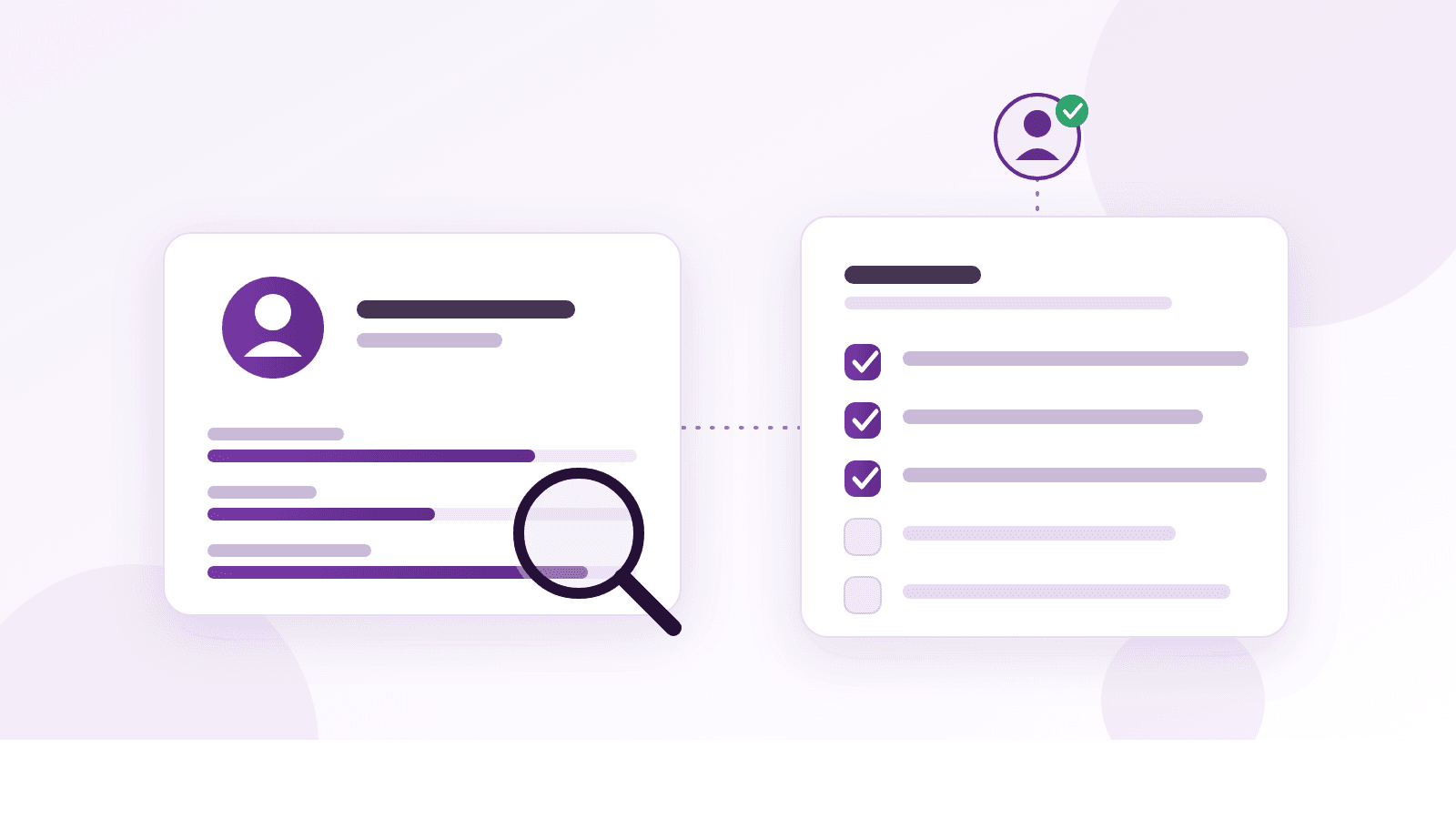
None of this asks you to hand the decision to someone else. It asks you to gather better evidence so the decision you make is a good one. Define the outcome, borrow an expert to set and read the bar, test with real work, and interview the reasoning with the same questions for everyone. Written down as a short scorecard, those pieces turn a role you cannot judge into one you can, and they leave a trail you can look back on when the fifth candidate blurs into the second.
This is the logic Kynto is built on, which helps most when you are hiring outside your comfort zone. It scores every candidate against the criteria you set, with your borrowed expert’s bar built in, and it explains each score in plain language so a non-expert can follow the reasoning and overrule it. It also sources candidates across a large talent pool rather than leaving you with whoever happens to apply, which matters when you do not yet have a network in the field. The judgment stays yours. What changes is that you are deciding on evidence instead of on a feeling you know you cannot trust here.
Key Takeaways
- Gut feeling works when you are the expert, because it draws on patterns you have lived. For a role outside your expertise that library is empty, so instinct reads confidence and likeness instead of ability.
- Define the outcome first, then borrow a domain expert to set the bar and read candidates against it, and test with a short piece of real, paid work.
- You can still judge plenty yourself: whether they explain clearly, reason from evidence, and ask sharp questions. Ask everyone the same core questions and decide on the evidence, not the vibe.
FAQ
I am not technical. Can I really hire a good engineer myself?
Yes, if you stop trying to grade the code and change what you assess. Define the outcome you need, borrow a trusted engineer to set the technical bar and run one deeper conversation, and use a short paid task they can grade. Your own job is to judge how the person reasons, explains, and asks questions, which you are perfectly able to do.
Should I pay someone to help me interview?
Often, yes, and it is money well spent. An hour with an experienced practitioner to shape your criteria, plus their presence in a final-round conversation, costs a fraction of a mis-hire. Many people in your network will help for a modest fee or a favour returned. Use them to write the bar, not just to give a thumbs up at the end.
How big should a trial task or work sample be?
Small enough to respect the candidate’s time and close enough to the real job to be revealing. A few hours of focused work, or a single paid trial day, is usually plenty. Pay for it, be clear about what good looks like, and have your borrowed expert help you read the result.
Hiring for a role you could never do yourself is not a reason to hire on faith. It is a reason to be more deliberate, not less: define the outcome, borrow the expertise, test the work, and judge the reasoning you are fully able to judge. Do that and the first specialist you bring in stops being a gamble. If you want the rest of your process to carry its share of that weight, see how Kynto helps founders hire on evidence.
You do not have to be the expert to make a great hire. You have to gather the right evidence. Kynto scores every candidate against the criteria you set and explains each point, so the judgment stays yours even on a role you could not do yourself.
See how Kynto works for founders