
Your Hiring Managers Interview Without Training. How Do You Prepare Them Without a Training Program?
As the HR lead, you wrote the job description, screened the applications and sent the shortlist. Then the interview that actually decides the hire happens without you: a 45-minute conversation led by a manager who last interviewed someone a year ago. Afterwards you get a message saying “good feeling, let’s go” or “not convinced”, and very little to compare.
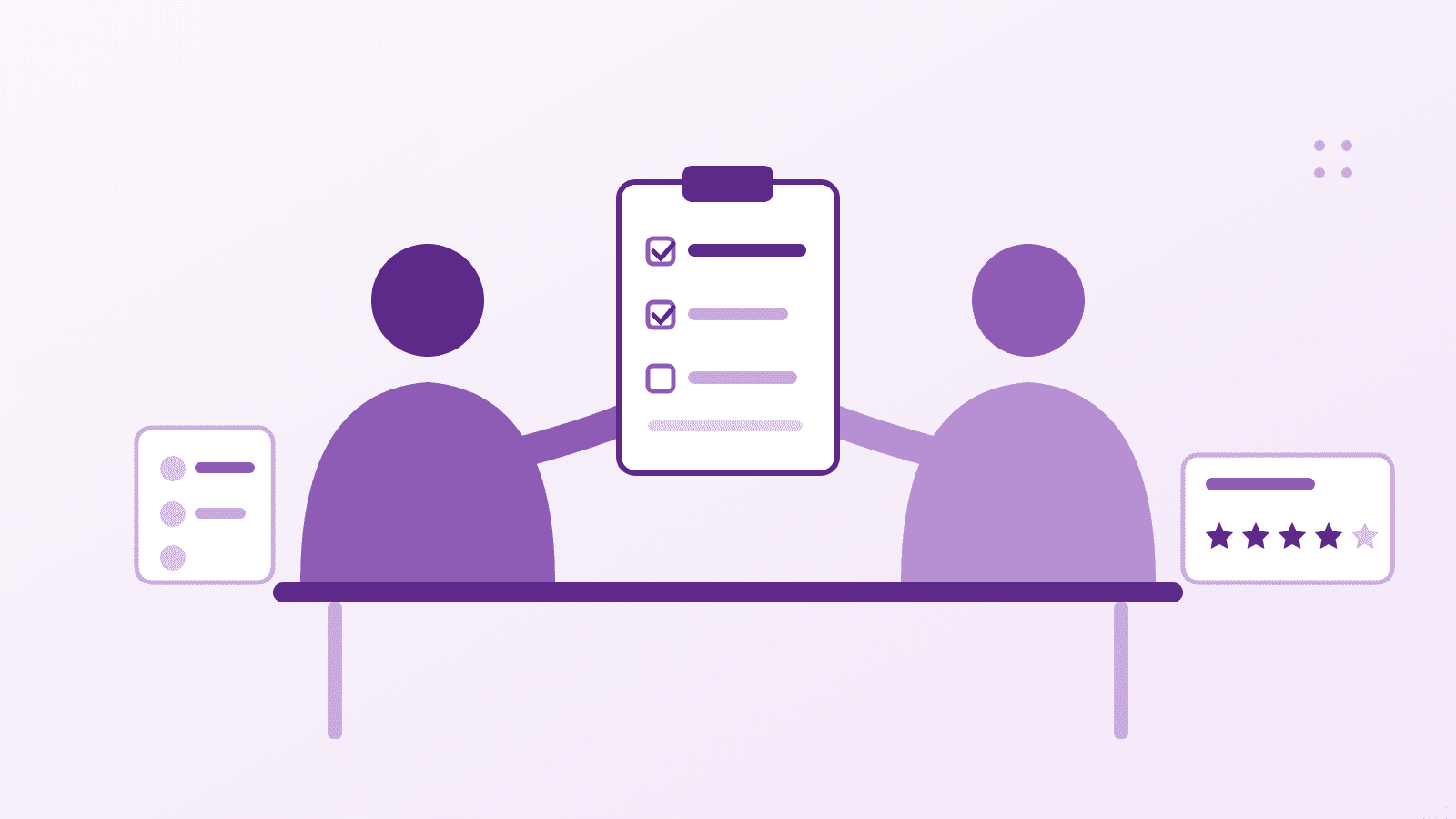
In a company of 50 to 200 people, HR rarely runs the final interview alone. The hiring manager knows the job, the team and the gaps, so they lead the conversation that matters most. Yet most of them have never been trained to interview, and a formal training program is out of reach for a small HR team. This guide covers a lighter approach: instead of training the interviewer once, you prepare each interview, role by role, in under an hour.
The Decisive Interview, Run by the Least Prepared Person in the Process
The interview is still the backbone of hiring. In the CIPD Resourcing and talent planning report 2026, based on a survey of more than 1,000 HR professionals in the UK and published in September 2026, 96% of organisations that hired in the past year used some form of interview. The same report shows how unevenly interviewers are prepared: 37% of large organisations had invested in inclusive recruitment and interview training for hiring managers, against only 7% of SMEs.
The data is British, but the pattern is familiar in French SMEs. HR prepares everything around the interview: the intake, the job post, the screening, the scheduling. The interview itself is handed to someone who is excellent at their own job, who interviews two or three times a year, and who has a full calendar on the day. Nobody decided that the most important step should be the least prepared one. It simply happens when there is no time to do otherwise.
What Goes Wrong in an Unprepared Interview
None of this is a question of judgment. A good manager without preparation falls into the same traps as anyone else, because a conversation without a plan follows the path of least resistance:
- The manager talks more than the candidate. They know the team, the projects and the challenges, and they want the candidate to like the job. Half the interview becomes a presentation, and the evidence you needed is never collected.
- Each candidate gets different questions. The conversation follows the CV and the mood of the moment. Three interviews later, the candidates cannot be compared, and the decision goes to the one who was most pleasant to talk to.
- A friendly question crosses a legal line. “Do you have children?” or “Where are your parents from?” are often asked out of genuine curiosity. In France, both are off limits, and the company is exposed whatever the intention.
- The feedback is an impression, written late. Notes are taken from memory two days later, if at all. HR then has to turn “good energy” into a decision, which is exactly where hiring debriefs get stuck when interviewers disagree.
The legal point deserves precision, because it is the one managers know least. Under article L1221-6 of the French Labour Code, any information requested from a candidate can only aim to assess their ability to do the job or their professional skills, and must have a direct and necessary link with the role. And article L1132-1 forbids excluding anyone from a recruitment process on a long list of grounds, including origin, sex, age, family situation, pregnancy, health, disability, religious beliefs, union activity, physical appearance, place of residence and the ability to speak a language other than French.
Why a Training Course Is the Wrong Fix for a Small Team
The obvious answer is to send every manager on an interview skills course. In a large company with a dedicated talent team, that works. In a company of 120 people, the numbers rarely add up. Take an illustrative example: eight managers who interview, around fourteen hires a year, one HR lead.
| Approach | Upfront time | What the manager remembers on interview day |
|---|---|---|
| Two-day course for eight managers | 16 manager-days, booked months in advance | General principles, learned for a hire that may come six months later |
| One-page kit per role, plus a 15-minute pre-brief | About 45 minutes of HR time per role, 15 minutes per interviewer | The criteria, the questions and the limits for this role, read the same morning |
The time is only half of the problem. Managers who interview a few times a year forget what they learned between two hires, and the people who interview change as the company grows. Training builds a skill that has few chances to be practised. Preparation, on the other hand, is used immediately, on a real candidate, for a real role.
Few organisations of any size invest here: in the same CIPD report, only 13% of organisations said they had improved the selection skills of interviewers as part of their retention efforts. The fix that fits a small team is not a smaller version of a corporate program. It is a different tool.
Prepare the Interview, Not the Interviewer
The idea is simple: everything a trained interviewer carries in their head, you put on paper for this specific role. The manager does not need to become an expert interviewer. They need to know what to look for, how to ask for it, and what not to ask.
1. One page per role, built from the intake
If you ran a proper hiring manager briefing at the start of the search, most of the kit already exists. Turn it into a single page:
- Three or four criteria that decide success in the role, in the manager’s own words.
- Two questions per criterion, asking for a real past example: “Tell me about a time you had to renegotiate a deadline with a client. What did you do?” rather than “Are you good with clients?”.
- What a strong answer looks like, in one line per criterion, so that the score means the same thing for every candidate.
The format matters less than the consistency: asking every candidate the same questions is what makes structured interviews more reliable than a free conversation.
2. Split the ground between interviewers
When two or three people meet the candidate, give each one their own criteria. The manager covers the technical core of the job, a future colleague covers day-to-day collaboration, HR covers motivation and conditions. Nobody repeats the same questions, the candidate does not tell the same story three times, and each interviewer has a smaller, clearer task.
3. A short list of questions not to ask, with alternatives
A list of forbidden topics is easy to forget. What helps a manager is the reformulation: most risky questions hide a legitimate need about the job.
| Instead of asking | Ask about the job requirement |
|---|---|
| “Do you have children?” | “The role involves two days of travel a week. Is that compatible with your organisation?” |
| “How old are you?” | “What experience do you have with this type of project?” |
| “Where are you from originally?” | “The role is in English with our clients. How comfortable are you working in English?” |
| “Are you planning to move closer?” | “We are on site three days a week. Does that work for you?” |
4. A 15-minute pre-brief, and notes before the debrief
The morning of the interview, spend 15 minutes with each interviewer: go through the page, agree on who covers what, and remind them to let the candidate speak for most of the time. Then ask for one thing after the interview: a score and a sentence of evidence per criterion, written before anyone talks to anyone. Independent notes are what make the debrief a comparison rather than a negotiation, and they let you score each candidate across the whole process instead of on a single conversation.
Where the Kit Lives Decides Whether It Gets Used
A good kit that nobody opens changes nothing, and this is where the two situations most SMEs are in differ:
- Without an ATS, the kit is a document in a shared drive, the CV arrives as an email attachment and the feedback comes back by chat. Three places, and the manager opens the one that is in front of them.
- With an ATS the managers rarely log into, the interview guide may exist as a feature, but if the tool is too heavy for occasional users, it stays unused. That is a common reason an ATS ends up with nobody using it.
The practical rule: put the kit where the manager already is. Attach it to the calendar invitation, next to the CV, and collect the scores in the same place. The fewer clicks between the invitation and the feedback form, the more complete your notes will be.
This is the approach Kynto takes for HR teams in small companies: the manager briefing and the job description are generated in one click from the intake, interviews are scheduled automatically, and each interviewer scores the candidate against the same criteria in one shared pipeline. You keep the judgment and the decision; the tool carries the preparation. You can see how it works on the page for HR teams using Kynto.
Key Takeaways
- The interview that decides the hire is often led by the least prepared person in the process, simply because nobody has time to prepare it.
- For a small team, preparing each interview works better than training each interviewer: one page per role, shared criteria, questions based on past examples.
- Give managers reformulations rather than a list of forbidden topics, and collect a score and evidence per criterion before the debrief.
FAQ
What if a manager refuses to use the interview guide?
Do not present it as a constraint. Present it as time saved: the questions are ready, the debrief is shorter, and the decision is easier to defend. Ask them to use it for one hire, then compare the feedback with the previous one. Most managers keep a tool that makes their own decision easier.
Should HR sit in on the manager’s interview?
Not systematically. For a manager’s first hire, or a sensitive role, sitting in once is a good way to coach without a course. Otherwise, splitting the criteria between a separate HR interview and the manager’s interview gives you more information for the same time.
What should we do if a manager asked a question they should not have?
Make sure the answer plays no part in the decision, and note that the evaluation rests on the criteria of the role. Then add the question and its reformulation to the kit, so it does not happen again. It is a gap in the preparation, not a reason to take the manager out of the process.
Your managers do not need to become professional interviewers. They need a clear page, a short conversation before the interview and a simple way to report what they saw. If you want to go further on the coordination side, our article on coordination between HR and hiring managers looks at the other moments where the handoff breaks.
A prepared interview is the first step. The next one is asking every candidate the same questions. Read how small teams make interviews comparable.
Read the guide to structured interviews